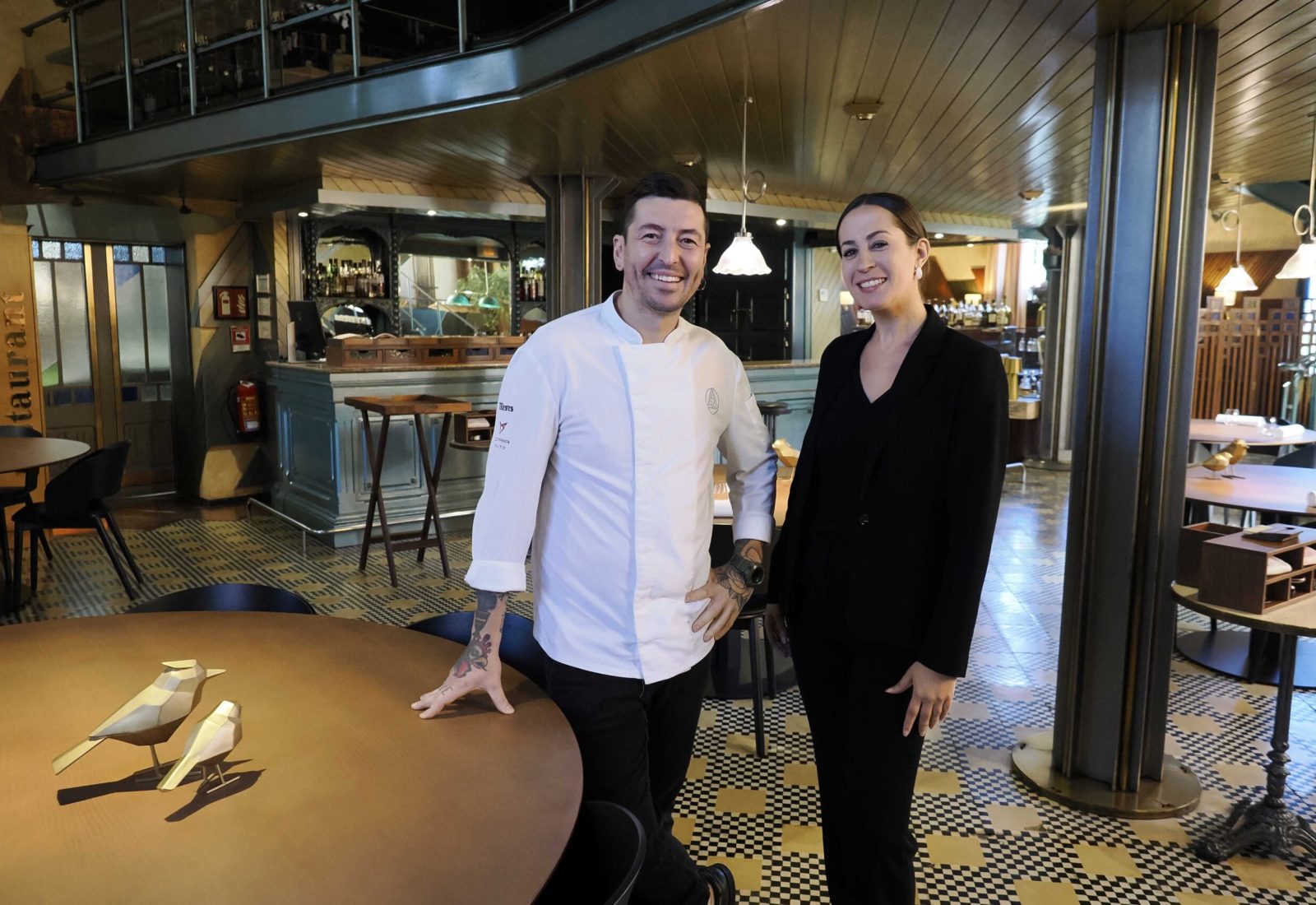
L’ARA Mengem has interviewed Cristina Feliu, front-of-house manager at L’Aliança in Anglès, to discuss the restaurant’s current situation, its commitment to local produce, the role of Catalan wines in its cellar and the gastronomic project she shares with chef Àlex Carrera.
In her conversation with journalist Trinitat Gilbert Martínez, Cristina looks back at the different stages in L’Aliança’s history, explains the philosophy that guides both the kitchen and front of house, and reveals one of Àlex’s professional dreams: to one day open a restaurant dedicated to traditional Catalan slow-cooked cuisine.
Three stages of the same story
The interview presents L’Aliança as one of the country’s great dining establishments and explores the three main stages of its recent history.
The first was led by Lluís Feliu, Cristina’s father, who together with his brother Josep Maria transformed the family bar into a gastronomic restaurant. Lluís’s work in the kitchen and Josep Maria’s work in the dining room enabled L’Aliança to earn its first Michelin Star.
The death of Lluís Feliu on Christmas Eve 2013 left a profound void, both within the family and in the gastronomic project. Six months later, Cristina and her sister Marina decided to reopen the restaurant and begin a new stage based on popular dishes and a more informal approach.
That reopening kept L’Aliança alive and gradually restored its connection with its customers. The third stage began when Àlex Carrera joined the kitchen in 2019.
Together, Cristina Feliu and Àlex Carrera developed a more ambitious proposal, capable of preserving the family legacy while taking it towards a new gastronomic expression.
A renovated kitchen and wine cellar
During the interview, Cristina also discusses the major renovations recently carried out at L’Aliança.
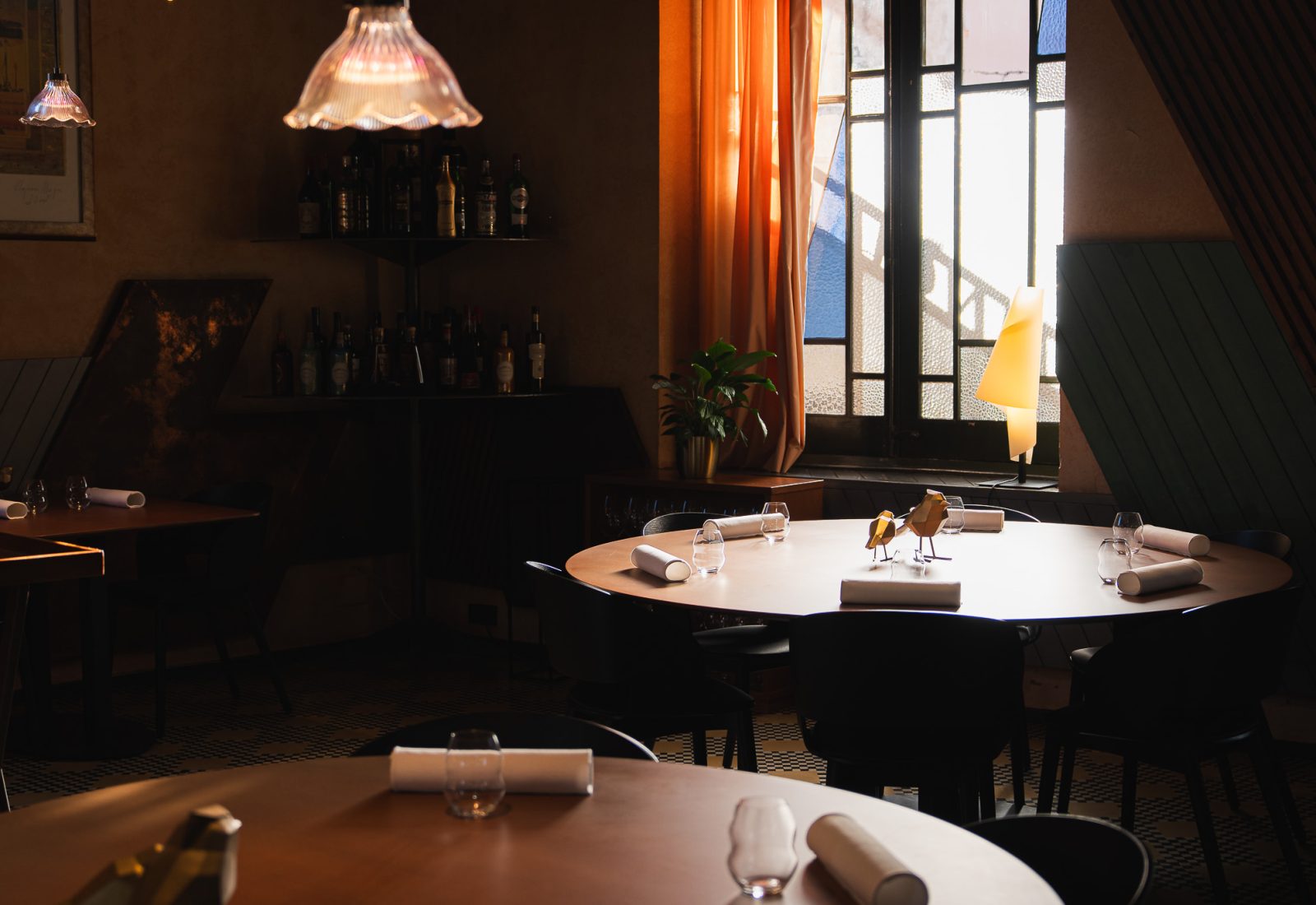
The kitchen has been expanded and modernised to provide the team with more space, natural light and functionality. The renovation allows them to work more comfortably and develop a technically demanding gastronomic proposal made up of numerous preparations and courses.
The wine cellar, located on the first floor, has also been renovated. It preserves wines connected to the restaurant’s different periods, from bottles that formed part of Lluís Feliu’s original cellar to those later added by Cristina.
In this way, the wine selection also tells the story of the restaurant, connecting its family past with its current proposal.
A firm commitment to Catalan wines
One of the main themes of the interview is the pairing of Catalan wines that accompanies the tasting menus.
L’Aliança has a cellar containing approximately 350 references and champions a selection focused primarily on wines produced in Catalonia. For Cristina, this commitment is a natural consequence of the restaurant’s location and philosophy.
Proximity is not limited to the ingredients that arrive in the kitchen. It should also be reflected in the bottles served, the producers the restaurant works with and the decisions made in the dining room.
Although some diners still ask for French or German wines or Champagne, L’Aliança highlights the high standard of Catalan winemakers and the ability of their wines to accompany a fine-dining experience.
This selection allows guests to discover a wide range of appellations, grape varieties, territories and projects while reinforcing the coherence between the menu, the cellar and the surrounding area.
Local produce as a philosophy
Local produce is one of the pillars of L’Aliança’s cuisine.
Cristina explains that the aim is to showcase the region and work with high-quality ingredients sourced as locally as possible. This commitment can be seen in the savoury dishes, desserts, cheese trolley and wine pairings.
One example is a dish dedicated to Girona apples, a local product transformed into a variety of textures and preparations. The cheese trolley also prioritises Catalan producers, turning this part of the menu into an opportunity to discover the richness of the region’s cheesemaking tradition.
However, proximity is not understood purely in geographical terms. It also means building relationships with producers, knowing where ingredients come from and creating a proposal that is consistent with the place where the restaurant is located.
Sustainability beyond words
The interview also looks at the sustainability measures introduced in the new kitchen.
During the renovation, the team decided to install waste separation points beside the cooking stations. Separate outlets for plastic, organic waste and paper make recycling easier during service and integrate the practice into the cooks’ daily routine.
Cristina believes sustainability should go beyond visible gestures or measures that can easily be turned into a communication tool.
Choosing local wines, reducing transport distances, selecting nearby producers, managing waste properly and avoiding inconsistencies are all part of a responsible approach to hospitality.
Flavour as the main objective
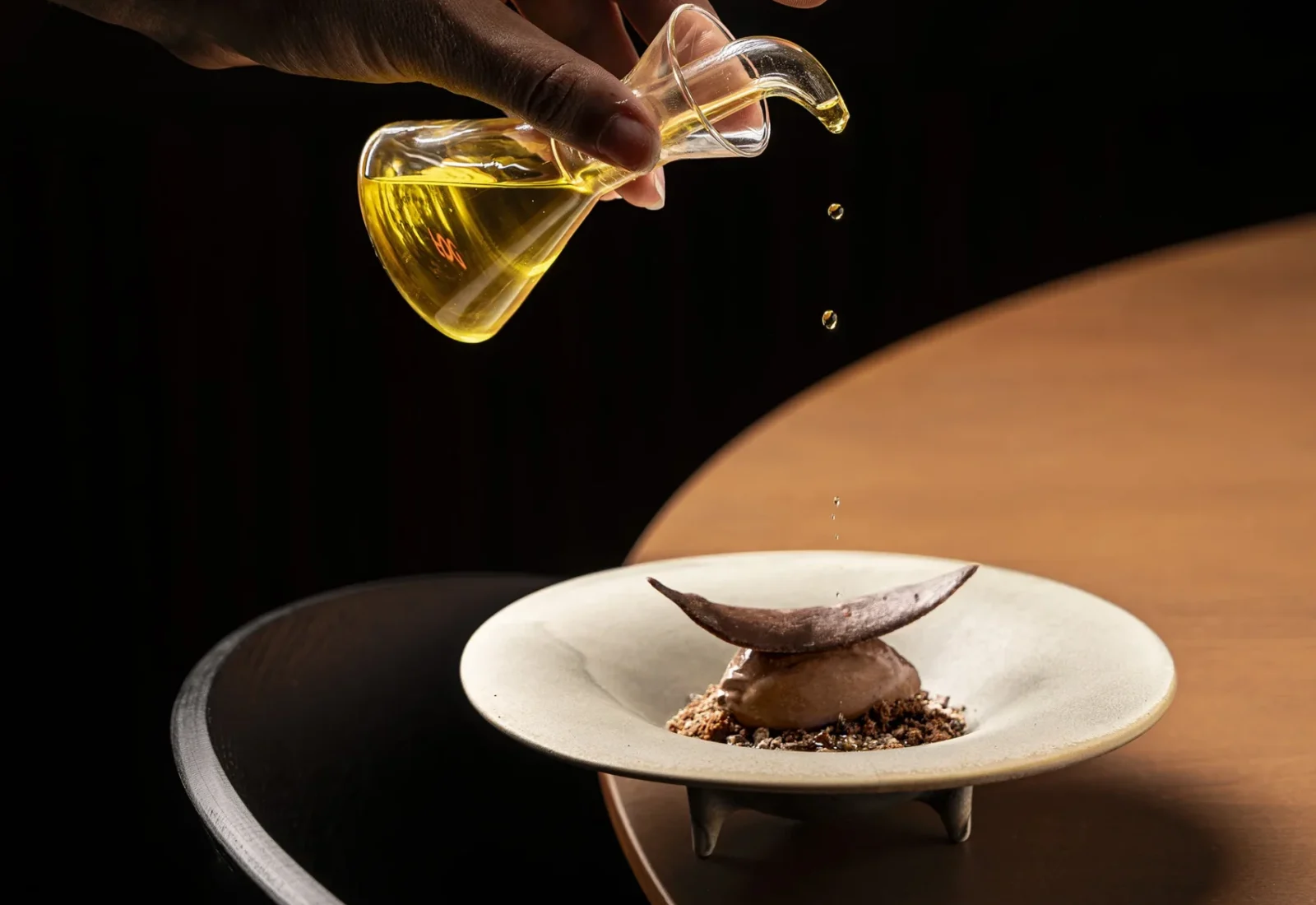
Àlex Carrera’s dishes stand out for their visual presentation, but aesthetics are never the main objective.
As Cristina explains in the interview, the priority is to ensure that every bite is full of flavour. Composition, tableware and presentation should support the dish, but they should never conceal or replace the intensity of the ingredients.
This principle defines a technical and elaborate style of cooking that nevertheless remains recognisable. Ingredients are transformed and presented in unexpected ways while retaining their identity.
Àlex’s approach is largely based on the dishes he himself would like to eat. This results in a highly personal cuisine shaped by memory, place and flavour.
Vermouth time, a tribute to the restaurant’s origins
L’Aliança’s menus begin with a sequence of appetisers inspired by the traditional vermouth hour.
This opening is a tribute to Cristina’s grandparents, her father and the restaurant’s past as a bar and meeting place in Anglès. Long before vermouth became fashionable again, it was already part of everyday life at L’Aliança.
The first appetisers help introduce diners to the restaurant and explain, through flavour, where it comes from. Memories of the family bar are transformed into small contemporary creations prepared with precision and great attention to detail.
This opening turns the menu into a journey through the different lives of the restaurant and establishes a direct connection between the current proposal and its roots.
Turning the Figueres onion into a luxury ingredient
Among the dishes featured on both tasting menus is the Figueres onion, one of Àlex Carrera’s most representative creations.
The dish begins with a humble, everyday ingredient to demonstrate that gastronomic luxury does not necessarily have to be associated with caviar, foie gras or expensive products.
Àlex peels the onion and cooks it at a low temperature before frying it and finishing it in the oven. The dish is completed with a soup made from intensely charred onion and a bonbon also prepared using the same ingredient.
The result is an onion-on-onion creation built around different techniques, textures and intensities. The dish has been part of L’Aliança’s offering since 2019 and has remained on the menus thanks to its popularity among diners.
The challenge of working from Anglès
Cristina also speaks openly about the difficulties of running a gastronomic restaurant in a town away from major tourist destinations.
Most guests need to travel to L’Aliança by car, and the surrounding area does not have a large hotel offering. These circumstances can affect the consistency of services, with some days being very busy and others seeing lower occupancy.
Added to this are changing consumption habits, declining alcohol consumption and a reality shared by many restaurants: the irregular nature of bookings.
Cristina’s wish is simply to be able to work comfortably and maintain a more consistent pace. A straightforward ambition, but one that is essential for consolidating the project, taking care of the team and continuing to offer a demanding gastronomic experience.
The dream of a traditional Catalan restaurant
The interview ends by revealing one of Àlex Carrera’s professional dreams: to open another restaurant dedicated to traditional Catalan cuisine.
A place centred around casseroles, slow cooking and long-simmered dishes, where he could prepare recipes such as tripe with chorizo and other classics of popular cuisine.
This imagined project would not represent a departure from L’Aliança’s current proposal, but rather another way of expressing the same interests: flavour, memory, tradition and the pleasure of cooking dishes that require time.
You can read Trinitat Gilbert Martínez’s full interview in ARA Mengem.